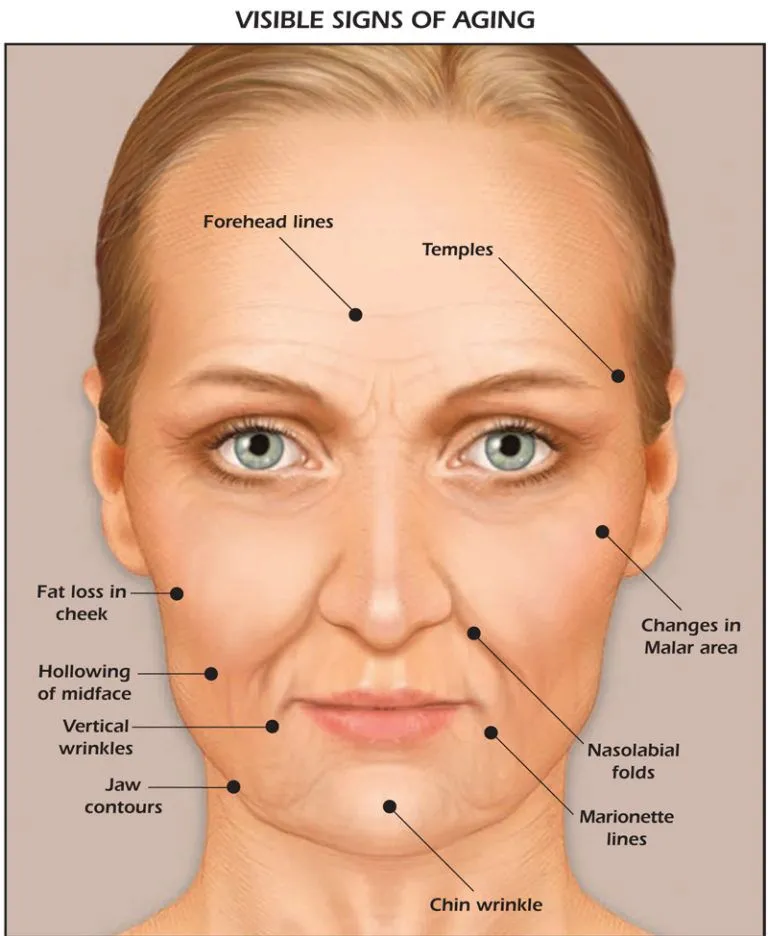
1. Natural aging: Collagen and elastin fibers break down over time, leading to less skin support.
2. Sun exposure: UV rays accelerate the breakdown of skin structure.
3.Weight loss: Rapid or significant weight loss can leave skin loose.
4. Lifestyle factors: Smoking, poor diet, and dehydration can contribute to sagging.
As we age, our skin naturally loses its youthful firmness and elasticity. This is largely due to a gradual reduction in collagen and elastin—proteins that give skin its structure and bounce. When production slows, the skin becomes thinner and less able to resist gravity, leading to sagging, especially around the jawline, cheeks, and neck.
Sun exposure is another major culprit. Ultraviolet (UV) rays penetrate deep into the skin, breaking down collagen fibers and speeding up the aging process. Even if you’ve always taken great care of your skin, years of sun exposure can catch up and cause visible drooping and wrinkles.
Significant weight loss, while healthy, can also contribute to sagging skin. When fat is lost rapidly, the skin doesn’t always have time to adapt, which can leave it looking loose or deflated.
Everyday habits matter, too. Smoking, poor nutrition, dehydration, and lack of sleep all weaken the skin’s natural support system. Over time, these factors can make sagging more noticeable and accelerate the appearance of aging.